
South Korea

login to the site


Sightseeings
Seoul is the capital of the republic
Airport in Incheon
Cities of South Korea
Jeju Island (Jejudo)
Korean food
Koreans
State
Korean War
"Foreigners" in Korea
Books about Korea and Koreans
Your search queries
Travel and impressions
Hotels in Korea
Flights to Korea
Bibliography
News
Site search
news
29.11.23
South Korea launched a spy satellite

Республика Корея
South Korea or Republic of Korea?
The official name of the country to which this website is dedicated is the Republic of Korea. However, in Russian-language media, it is usually referred to as South Korea due to its location in the southern part of the Korean Peninsula. Russia does not border South Korea, unlike North Korea (officially the Democratic People's Republic of Korea), with which it shares a short border of just 39,4 kilometers.
What do Russians associate South Korea with?
What does our average compatriot know about the Republic of Korea? What associations does it evoke in our fellow citizens?
First of all, Russia is home to a Korean diaspora (148,000 according to the 2002 census), and it is this diaspora that shapes our understanding of Korean culture. It's probably hard to find a person in our country who isn't familiar with the names of Yuli Kim and Viktor Tsoi. However, it's important to understand that Koreans migrated to Russia as early as the second half of the 19th and early 20th centuries. The Revolution of 1917 and the subsequent "impenetrability" of the USSR's borders, the mass forced migration of Koreans from the Far East to Central Asia in 1937, World War II, and then the Cold War led to the estrangement of the Korean diaspora culture from the indigenous culture. Suffice it to say that a Korean from Russia who speaks "his" Korean language will have difficulty understanding someone speaking in Seoul . And the tasty, spicy "Korean" carrots, cut into long slices and ubiquitous in our supermarkets, simply don't exist in Korea: this invention originated in the USSR and hasn't yet made its way back to Korea. However, it probably will, since after the well-known events of the early 1990s, cultural ties between our countries have strengthened and continue to develop.
Many of our fellow citizens drive Hyundai, Kia, and Daewoo cars and use electronics from Samsung and LG. Everyone has heard of these brands, and we have a strong perception of the "great technological leap" South Korea has made in recent decades.
Of course, everyone knows about the existence of two Korean states and how different their socio-political systems and ways of life are. They also know about the Korean War between North and South Korea. But few realize that approximately 3 million people died during this war (data is contradictory, and some sources say even more): the scale of the tragedy is little known in our country, despite the active participation of the USSR in these events.
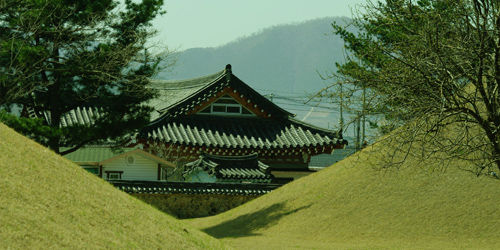
What else? The country evokes images of yellow-green, blooming flowers. Crooked pine trees on the seashore. Perhaps our "advanced" compatriots are familiar with the films of Kim Ki-duk, remember the 1988 Olympics in Seoul, have heard that Korea is called the "Land of the Morning Calm," and that they " eat dogs " there, and that taekwondo was born there. But that's where most people's impressions and associations end.
Why do we need another website about South Korea?
Russia and Korea have long had close ties. The outbreak of the Russo-Japanese War, which played a major role in Russian history, was in no small part due to the rapprochement between Russia and Korea and Japan's resistance to this rapprochement. The large Korean diaspora in our country has always facilitated and continues to facilitate the rapprochement of our cultures.
We want this website to be gradually developed by those interested in and familiar with Korean culture and those who have visited the Republic of Korea. We would be happy if the website could help those planning to travel to South Korea for tourism or business, dispelling myths and creating a more accurate understanding of life in the country of "people in white." Any visitor, while following the rules , can register and contribute to the site with their impressions, knowledge, warnings, photographs, etc.
Diplomatic relations between our countries were established only in 1990. As of this writing, only one small guidebook to South Korea in Russian is available in bookstores. The vast majority of Russian-speaking tourists to South Korea come from the Russian Far East. In short, there's still some work to be done.
Ignorance divides, knowledge brings us together. We invite everyone to participate in the project!