South Korea

login to the site


Sightseeings
Seoul is the capital of the republic
Airport in Incheon
Cities of South Korea
 Busan
Ulsan
Gyeongju
Jeju Island (Jejudo)
Korean food
Koreans
State
Korean War
"Foreigners" in Korea
Books about Korea and Koreans
Your search queries
Travel and impressions
Hotels in Korea
Flights to Korea
Bibliography
News
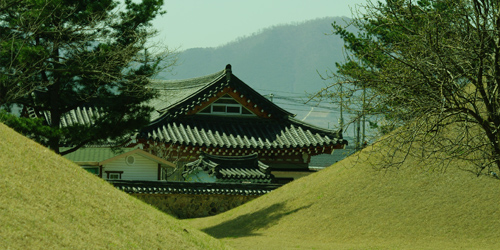
Busan

Busan is the largest port in the Republic of Korea.
Busan is the second largest and most famous city in South Korea. It is the country's largest port and is home to nearly 4 million people. It is located in the southeast of the Korean Peninsula, on the westernmost part of the Korea Strait, separating the peninsula from the Japanese islands of Tsushima. Busan is nestled in a very hilly area, between the Nakdong River to the west and the Haeundae Spa to the southeast.
Busan was the last South Korean stronghold in the Korean War . The North never captured it until the UN entered the war and the war began to slide back toward the 38th parallel. Therefore, Busan suffered less from the fighting than other Korean cities; its old neighborhoods with narrow streets have been preserved.
Fish Market in Busan
While exploring Busan, be sure to leave plenty of time for its famous fish market, the largest in Korea. It's easily worth spending half a day there, considering you can not only see the seafood but also taste it. Dishes are prepared right in front of you from the seafood you choose. Just keep in mind that some dishes are made with raw seafood. You'll find everything here: fried eels, shark dishes, giant octopus, squid, and crustaceans. The market is especially stunning in the mornings, when wholesale trading takes place. Fishing fleets arrive before dawn, and the catch is immediately unloaded at the pier.
Busan is also home to what is arguably Korea's most famous beach, Haeundae. However, the beach season here is short: July and August. For some reason, swimming is prohibited the rest of the year, and police are said to vigilantly enforce this ban.
Busan Attractions: Observation Tower
In Busan, it's also worth climbing the observation tower. Its observation deck offers a magnificent view of the city and the port area. In front of it, in Yongdusan Park (translated as "Dragon Head Mountain"), stands a monument to Admiral Yi Sun-sin. A hero of the Seven Years' War with Japan from 1592 to 1598, the Korean admiral defeated the Japanese fleet and died in the final decisive battle. Koreans consider him the inventor of the ironclad.
Another famous landmark in Busan is Beomeosa Temple. The temple was founded in 678 by the monk Wisan during the reign of King Munmu. There's a legend surrounding the temple's founding. When the Japanese once again threatened the Korean state, the king had a dream in which he was commanded to find the monk Wisan and accompany him to Mount Gomojeon. There, he prayed for seven days and nights at a golden spring containing a fish descended from the sky. The king complied, and after a week of prayer, warriors descended from the sky and routed the invaders. A temple was then founded on this site. It has burned several times since then during Japanese raids, but has been rebuilt each time.
It is also worth mentioning the Gwangan Bridge, the longest bridge in Korea, which was opened in 2003 and is over 7 kilometers long.