
South Korea

login to the site


Sightseeings
Seoul is the capital of the republic
Airport in Incheon
Cities of South Korea
Jeju Island (Jejudo)
Korean food
"Russian" Korean in Korea...
 Soju
How I Ate a Dog
Koreans
State
Korean War
"Foreigners" in Korea
Books about Korea and Koreans
Your search queries
Travel and impressions
Hotels in Korea
Flights to Korea
Bibliography
News
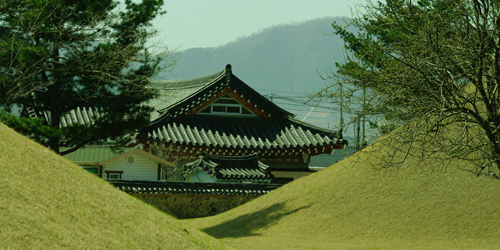
Soju
|
When discussing drinking culture in Korea, it's important to first mention that Koreans drink a lot. They drink, perhaps even a lot. Statistics show that over 3 billion bottles of soju are consumed annually. This works out to a bottle per week for every Korean, including women, the elderly, and children. This is largely due to the fact that sharing a drink after work is considered the best way to bond with others. After work, everyone goes to a bar or restaurant for team building and drinks while enjoying pleasant conversation. The boss, as a rule, drinks the most, because building good relationships requires sharing a drink with each subordinate. Singing karaoke together is a favorite pastime. Finally, late in the evening or at night, everyone goes home to have a hangover soup a few hours later and get back to work. And this happens more than once a week.
If anyone tells you that, despite such traditions, you won't see drunks in Korea, that's not true. You will see them, often. If not on all fours, then swaying vigorously. But what we've truly never seen is an aggressive drunk. Alcohol here somehow doesn't lead to aggression, but rather to sociability and peace. It remains a mystery how Koreans get so much health, or perhaps their livers are somehow differently structured? Some believe that the average Korean's liver is less efficient at eliminating alcohol, less efficient at converting it into hangover-causing waste. That's why drinking doesn't trigger aggression or a severe illness the next day. I don't know, I don't really believe in such theories, but the fact remains: they drink a lot, but they also work a lot and succeed. Maybe it's all because of what they drink—namely, soju, Korean vodka?
The South Korean government is persistently pursuing a policy of reducing the strength of soju. It's said that this trend was initiated by Park Chung-hee, who lowered the strength of the flagship alcoholic drink to 25%. Now, quite a lot of soju is sold at 18%. Perhaps this is precisely because, to build good relationships, you need to drink with everyone; it's essentially a ritual. Therefore, reducing the strength leads to lower alcohol consumption, but without sacrificing team building. I'd venture to suggest that if all soju had remained at 40% strength, South Korea's economic success of recent decades would have been impossible.
So much for the strength. But what is soju made from and how? I'll have to disappoint the aesthetes here. From 1965 to 1991, in order to conserve grain, South Korea banned traditional vodka-making recipes by law. They simply took alcohol, diluted it, added flavorings, and—presto—made soju. And even today, this so-called "recipe" is still in use. They say the government ensures that 35% of soju is made this way. But what is known about the remaining 65%? Due to the difficult post-war years, the traditional soju-making recipe was nearly lost. Incidentally, it was brought to Korea by the Mongols around 1300. They brought here the distillation technology, which, in turn, they borrowed from the Persians during their conquests in Central Asia. It is now claimed that "proper" soju is made in Andong, a small village near Gyeongju , considered the birthplace of Korean aristocrats. Incidentally, it was here, according to legend, that the headquarters of the Mongol Khan Kublai Khan, the "inventor" of soju, was located.
Real soju is made without the use of commercial yeast; instead, a special grain starter is created. Wheat grains and rice are ground, water is added, and the resulting mixture is then formed into cakes, which are carefully pressed in special molds with feet (remember, grapes were traditionally pressed with feet, too). Then, they wait three weeks for the starter to mature. In the second stage, these dried cakes are ground again and added to cooled rice water. This mash is stored in large clay pots, where the "right" bacteria work, producing alcohol. The final, familiar stage is the distillation itself. They distill to 45 degrees Celsius, producing true "firewater." After distillation, the product is left to settle in a cool cellar for another 100 days before being bottled.
Obviously, this recipe should be taken with a grain of salt: they're probably leaving something crucial out, and who would want to fully reveal the secrets? For the sake of completeness, we should add that you can read online that soju is made from some kind of "sweet potato." Perhaps such technologies exist, but I don't know what kind of beast this "sweet potato" is. I think potato vodka is more typical of places like Norway, Denmark , or Iceland. You can learn more about the technology, see clay stills, and sample authentic Andong soju at the museum, which is located in Andong at the corresponding distillery. Rumor has it that the soju museum is run by the son of the very woman, Ok Hwa Cho, who managed to preserve the nearly lost ancient recipe. The museum's stock skyrocketed after Queen Elizabeth II visited it several years ago.
Of course, this "real" soju from the Andong distillery isn't mass-produced. It's not cheap at all (around $50), and is mostly bought as a gift or souvenir. And the vodka people drink at home isn't at all expensive in Korea—$2-$4 a bottle, depending on the brand.
Now about how to drink soju. It's poured into shot glasses, the size of which is somewhere between a shot glass and a glass. It's poured, as is customary in Korea, with both hands. Here, everything is served with both hands, or rather, the left hand supports the right. It's customary to drink it gradually, not in one gulp, and to top it up while the glass isn't completely empty (pouring oneself is not customary). If there are older people at the table, the younger ones usually turn away when drinking. It's considered impolite for young people to drink in front of their elders. Incidentally, I've observed this among Russian Koreans as well. They say that recently, "perversions" have been introduced into the normal drinking of vodka. Perhaps this is a misunderstood, negative influence of the West with its "cocktails." For example, people have started mixing white vodka with beer; there are even special words for it: boktanju (a glass of beer and a shot of vodka) and suso boktanju (the opposite!). They also mix it with other drinks—Sprite, tonic, or syrup—to achieve various flavor nuances—lemon, melon, watermelon. I confess I'm not a fan of such experiments; I prefer pure ingredients. Incidentally, grape wine is unpopular in Korea, except perhaps among the "narrow aristocratic class" of Western intellectuals. Once, at a small provincial restaurant, a friend of mine ordered a bottle for variety. Little did he know that he was ordering a real treat to go with the bottle for free. At first, the staff searched for a corkscrew for a long time. They found it in a neighboring restaurant after about 15 minutes. Then a brainstorming session ensued: how to use this strange instrument? Finally, after many unsuccessful attempts by the waiter to implement his colleagues' suggestions, my friend triumphantly opened the bottle himself.
How do I personally experience soju? I can't say it's easy or pleasant to drink; the process still feels a bit daunting. The brew is slightly sweet and not strong, something I'm not used to at all. However, I disagree with those of our compatriots who claim it gives me a severe hangover. I actually got the impression that the drink puts me in the right mood, and I didn't notice any hangover at all. Although, of course, further experimentation is needed to confirm this information. |
|


