Venetian Impressions
 Rayons of Venice
How do you say it in Venetian?
Bridges of the Grand Canal
Doge's Palace
Temples of Venice
Saint Mark is the patron saint
Torcello Island
Burano and Mazzorbo
Venetian glass
History of Venice
Venetian Arsenal
Naval History Museum
Coat of arms and flag of Venice
The Greats in Venice
Parks of Venice
High water
Food in Venice
Venice Transportation
Venice Airports
Venice train station
Books about Venice
Mestre
Hotels in Venice
Municipal Internet Ve
News
Rayons of Venice
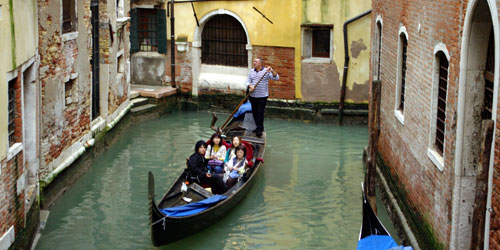
When talking about Venice's districts, two different types of territories are sometimes confused: the modern division of Venice, as a municipality, into parts, in accordance with Italian law, and the division of the oldest Venice into districts, which has been accepted since the Middle Ages, or more precisely, since the 11th century.
According to the first division, Venice, in addition to itself, includes not only the islands of the lagoon (Murano, Burano, Lido, Pellestrino, etc.), but also the mainland areas: Favaro, Mestre, Cirignago, Zelarino, and Marghera. At the end of the 20th century, several referendums (in 1979, 1989, and 1994) were held on separating mainland districts from Venice. However, the majority of the population opposed the reform. Only the 1998 referendum resulted in separation and the formation of an independent municipality, but only for one district—Cavallino. So, formally, Venice, as a city, occupies a considerable area and includes a fairly large mainland area.
But for tourists, of course, it's the "classical," island-style Venice that's of interest. It's precisely for this reason that around 7 million tourists come here annually. Therefore, for the purposes of this website, it's far more interesting to discuss the six districts of this small, ancient Venice: San Marco, Cannaregio, Castello, Dorsoduro, San Polo, and Santa Croce. Apparently, even the number of horizontal stripes on the Venetian flag is connected to this ancient division of the city into sestieri.
People often ask which of these six districts is best for tourists to stay in? We don't think it's worth living right on the Roma Square, at the port, or less than 200 meters from the train station. And right next to St. Mark's Square is probably not a good idea either: it's too crowded and hectic. Otherwise, there are no restrictions. Each district of Venice is beautiful in its own way, and the city itself is not very large: you can walk from one end to the other in an hour and a half. So, the old districts of Venice.
San Marco
Everything is clear from the name, it is in this area that the famous St. Mark's Square is located with all its many attractions, including Doge's PalaceThe name of the area naturally comes from Saint Mark - the patron saint of Venice. St. Mark's Square is the center of attraction for tourists visiting Venice. It's always very crowded. To see the square without the tourist crowds, you should arrive at 5 or 6 a.m. But even then, there will already be photographers here. The famous Venetian theater La Fenice Also located in San Marco, the district also includes the island of San Giorgio Maggiore and its cathedral. The cathedral's bell tower offers a magnificent view of Venice.
Cannaregio
A district in the north of Venice. Apparently, the name comes from the word canne, meaning reed, and there were probably once thickets of this plant here. If you go a little further away from Santa Lucia stationThis is a wonderful area for strolling and living. It's beautiful, everything is close, but there aren't many tourists and the hotels are less expensive. The area is home to the canal of the same name. It's the only "internal" canal in Venice served by vaporetto water buses, other than the Grand Canal, of course. Near the Ponte delle Guglie, which connects the banks of the Cannaregio Canal near the Church of San Geremia, there's a small market where you can buy fresh produce. The area is home to many churches. Perhaps the most famous is the Church of the Madonna dell'Orto, which houses a miraculous statue of the Virgin Mary, moved from a nearby garden (hence the name, Orto—"garden") after it was noticed to miraculously glow in the dark. The church is inextricably linked with the name of the great Venetian artist. Tintoretto and was his parish church. Tinoretto lived nearby; his house is also located in Cannaregio, and the Church of the Madonna dell'Orto contains two of his large paintings—"Adoration of the Golden Calf" and "The Last Judgment." The artist is buried here in the church.
The most prominent church is San Geremia (Chiesa di San Geremia), located at the corner of the Grand Canal and the Cannaregio Canal. Its tall, sweeping dome is visible from afar as you travel along the Grand Canal.
Cannaregio is home to the Venetian Ghetto—the word itself was born here—it was the world's first Jewish ghetto, established in the mid-16th century. Today, the Jewish community consists of several hundred people; five synagogues remain here, and there is a functioning museum.
Cannaregio is the most populated district of Venice, with a population of over 20.
Castello
The district's name derives from the word "castle," as it was once home to an old Roman castle, the site of which now houses the church of San Pietro di Castello. This district occupies the eastern part of the city and is the largest in area. It is here that the famous Arsenal, where the mass production of Venetian galleys was organized, unprecedented for shipbuilding at that time. In the eastern part of the region lots of greenery, it feels more spacious compared to the rest of Venice. The western part is home to such famous Venetian landmarks as the Church of San Zaccaria, the Cathedral of Santi Giovanni e Paolo, and the always-busy Riva degli Schiavoni, the main promenade in Venice.
Dorsoduro
This is the southernmost district of Venice, it is located entirely on the west bank Grand Canal and connects with the San Marco area Academy BridgeAccordingly, the famous Accademia Gallery museum is also located here. The "cockroach trail" for tourists traveling between Piazza San Marco and the Accademia bridge crosses this bridge. In Italian, "dorsa" means "backbone," and "duro" means "hard." Thus, the name of the area can be translated as "backbone." This likely stems from the area's slightly higher elevation and less unstable ground compared to the rest of Venice. Since the area also includes the islands of Giudecca and Sacca Fisola, its "center" is the Giudecca Canal. It is here, on the "main" side of Venice, that the famous Embankment of the Incurables, described by Joseph Brodsky, is located. Brodsky often visited this area, and one of his favorite restaurants is located here. These places are somewhat reminiscent of St. Petersburg: perhaps due to the width of the canal, close to the width of the branches that form the Neva Delta.
The Basilica of Santa Maria della Salute, built to commemorate the Venetians' deliverance from the plague, is located here. Dorsoduro also boasts many other famous churches, including the Church of the Santissimo Redentore (Saint Savior), which traditionally participates in the town's Festa del Redentore, which takes place on the third Sunday in July and is also known as the Feast of the Savior.
San Polo
This relatively small neighborhood is located in the very center of the city, within the semicircle formed by one of the two bends of the Grand Canal (the first, from Piazza Roma, is the northern one). It was long the commercial center of Venice, and somewhere here lies the heart of the "Venice fish." The neighborhood's name (Saint Paul) is associated with the church of San Polo, founded in the 9th century, located here. The San Polo and San Marco neighborhoods are connected. Rialto BridgeThe famous one is located nearby. Rialto Market and the oldest Venetian church, San Giacomo di Rialto. All these landmarks are also located in the San Polo district on the western bank of the Grand Canal. San Polo is also home to the famous Cathedral of Santa Maria Gloriosa dei Frari, the Church of San Rocco, and the Scuola Grande di San Rocco.
Santa Croce
Santa Croce is located in the western and central part of Venice. Today, this district serves as the "gateway" to Venice. It is here, in Piazza Roma, that all tourists arrive, arriving by bus and car. The port and all parking areas are located here, as Venice is a zone free of motor vehiclesIn fact, the western part of the area with the port, Piazza Roma, and Tronchetto is not yet Venice, but only its threshold. Therefore, the construction of a new Constitution Bridge and launch People Mover metro funicular With three stations, it doesn't exactly evoke a strong sense of rejection. But Santa Croce also has its own distinctly Venetian corners.
Here, the Fondaco dei Turchi palace houses the State Museum of Natural History, and the Ca' Pesaro palace houses the Gallery of Modern Art and the Museum of Oriental Art. As usual, these palaces are located Grand CanalSanta Croce also contains the churches of San Nicolo da Tolentini, San Giacomo dell'Orio, San Simeone, and San Stae. Incidentally, when planning your trip, don't confuse the Venetian Santa Croce with the Florentine one. After all, Florence also has a neighborhood with that name.